
Pitch Deck Creation

Pitchbob vs Apollo

Honest comparison for 2026 — features, pricing, and verdict
Pitchbob

Pitchbob

(4.5/5)
Paid
vs
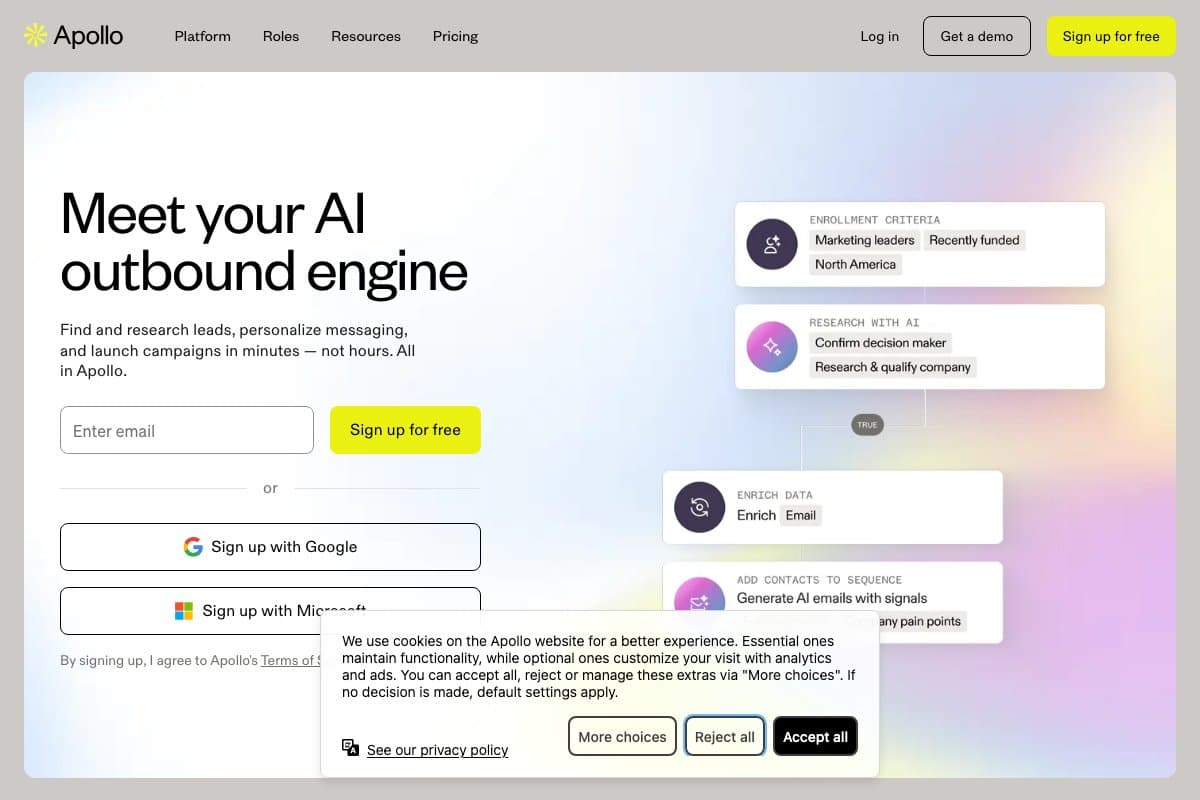
Apollo homepage and features

Apollo

(4.5/5)
Freemium

Last updated March 29, 2026

Quick Overview

Pitchbob vs Apollo comparison
AttributePitchbobApollo
Rating
(4.5/5)
(4.5/5)
PricingPaidFreemium
CategoryPitch Deck CreationEmail Automation
Top features
  • AI-powered slide generation
  • professional templates
  • drag-and-drop editor
  • brand customization
  • contact database
  • email sequences
  • CRM functionality
  • sales intelligence
Strengths
  • Time-Saving: PitchBob’s intuitive interface and customizable templates save you countless hours of design work, allowing you to focus on crafting your message.
  • Professional Results: Create pitch decks that look like they were designed by a professional, even if you have limited design experience.
  • Enhanced Collaboration: Work together with your team seamlessly, ensuring a cohesive and polished final presentation.
  • Large contact database
  • Generous free plan
  • All-in-one solution
WeaknessesNot available
  • Data accuracy inconsistencies
  • Interface can be cluttered
  • Limited customization options
Full reviewRead Pitchbob reviewRead Apollo review

Feature Comparison

Feature comparison between Pitchbob and Apollo
FeaturePitchbobApollo
AI-powered slide generation
Professional templates
Drag-and-drop editor
Brand customization
Presentation analytics
Collaboration tools
Investor-ready designs
Automatic formatting
Contact database
Email sequences
CRM functionality
Sales intelligence
Lead scoring
Email tracking
Workflow automation
Contact enrichment

Pricing Comparison

Pitchbob

Model: Paid

Full pricing details

Apollo

Model: Freemium

Full pricing details

Strengths and Weaknesses

Pitchbob

Strengths

  • Time-Saving: PitchBob’s intuitive interface and customizable templates save you countless hours of design work, allowing you to focus on crafting your message.
  • Professional Results: Create pitch decks that look like they were designed by a professional, even if you have limited design experience.
  • Enhanced Collaboration: Work together with your team seamlessly, ensuring a cohesive and polished final presentation.
  • Data-Driven Optimization: Leverage data-driven insights to optimize your content, track audience engagement, and make informed decisions to improve your pitch’s impact.
  • Increased Confidence: Present your ideas with confidence, knowing that your pitch deck is professional, engaging, and designed to leave a lasting impression on your audience.

Apollo

Strengths

  • Large contact database
  • Generous free plan
  • All-in-one solution
  • Competitive pricing
  • Good email deliverability

Weaknesses

  • Data accuracy inconsistencies
  • Interface can be cluttered
  • Limited customization options
  • Customer support response time

Which Should You Choose?

Choose Pitchbob if...

  • You value time-Saving: PitchBob’s intuitive interface and customizable templates save you countless hours of design work, allowing you to focus on crafting your message.
  • You value professional Results: Create pitch decks that look like they were designed by a professional, even if you have limited design experience.
Read full review

Choose Apollo if...

  • You want to start with a free plan
  • You value large contact database
  • You value generous free plan
Read full review

Read the Full Reviews

More Comparisons

Explore more

Common Questions

What is the difference between Pitchbob and Apollo?

Pitchbob and Apollo are both pitch deck creation tools, but they differ in features, pricing, and target audience. Read our detailed comparison above for a side-by-side breakdown.

Which is better, Pitchbob or Apollo?

The better choice depends on your specific needs. Pitchbob may be better for some use cases, while Apollo excels in others. Check the "Which Should You Choose?" section for personalized guidance.

Can I switch from Pitchbob to Apollo?

Most pitch deck creation tools support data export and import. Check both tools' documentation for migration guides and compatibility details.