 Email Marketing
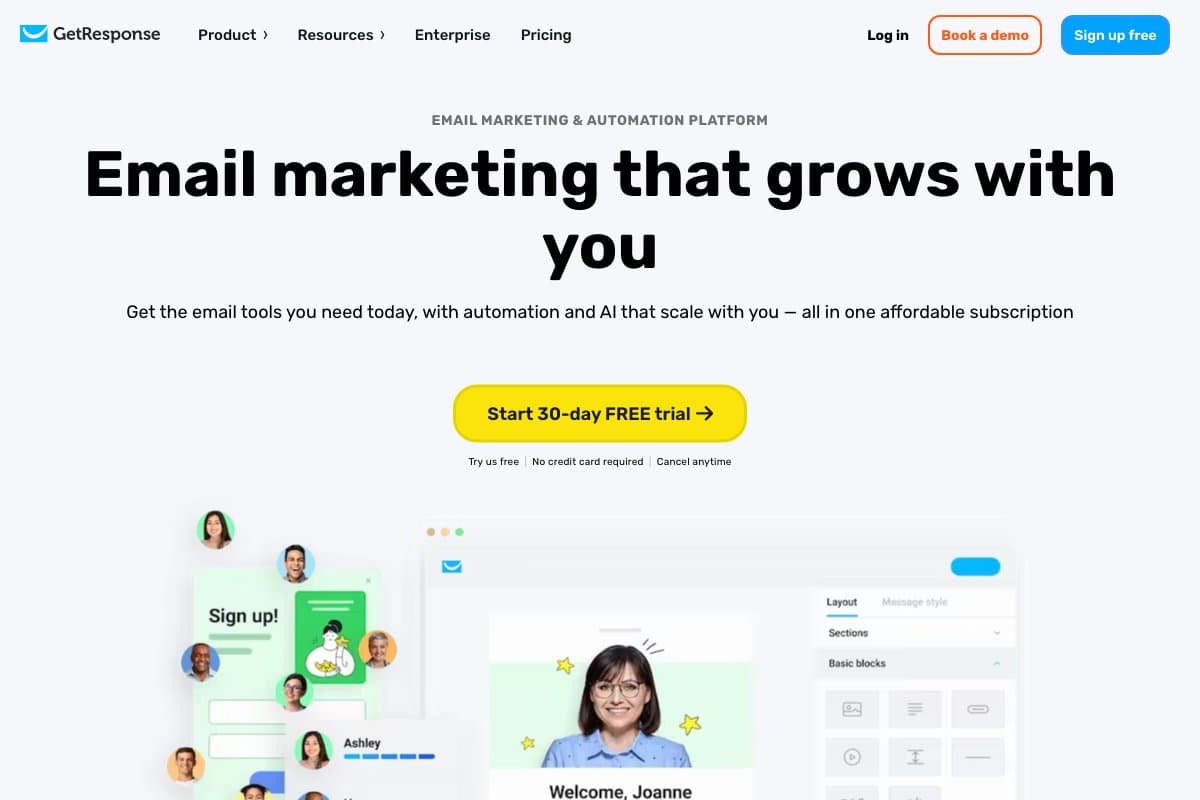
GetResponse
★★★★☆
4.5/5🚀 Looking for a comprehensive GetResponse review? This detailed analysis covers everything you need to...
Read Review →Sep 14
Honest comparison for 2026 — features, pricing, and verdict

Last updated March 29, 2026
| Attribute | GetResponse | Salesforge |
|---|---|---|
| Rating | ★★★★☆(4.5/5) | ★★★★☆(4.5/5) |
| Pricing | Paid | Paid |
| Category | Email Marketing | CRM Integration |
| Top features |
|
|
| Full review | Read GetResponse review | Read Salesforge review |
| Feature | GetResponse | Salesforge |
|---|---|---|
| Email automation | ||
| A/B testing | ||
| Landing page builder | ||
| CRM integration | ||
| Webinar hosting | ||
| Marketing automation | ||
| Segmentation | ||
| Behavioral triggers | ||
| Sales automation | ||
| Lead management | ||
| Email outreach | ||
| Pipeline tracking | ||
| Contact database | ||
| Activity logging | ||
| Deal forecasting |
Both GetResponse and Salesforge are strong email marketing tools. We recommend reading the full reviews to understand which fits your specific workflow better.
GetResponse and Salesforge are both email marketing tools, but they differ in features, pricing, and target audience. Read our detailed comparison above for a side-by-side breakdown.
The better choice depends on your specific needs. GetResponse may be better for some use cases, while Salesforge excels in others. Check the "Which Should You Choose?" section for personalized guidance.
Most email marketing tools support data export and import. Check both tools' documentation for migration guides and compatibility details.